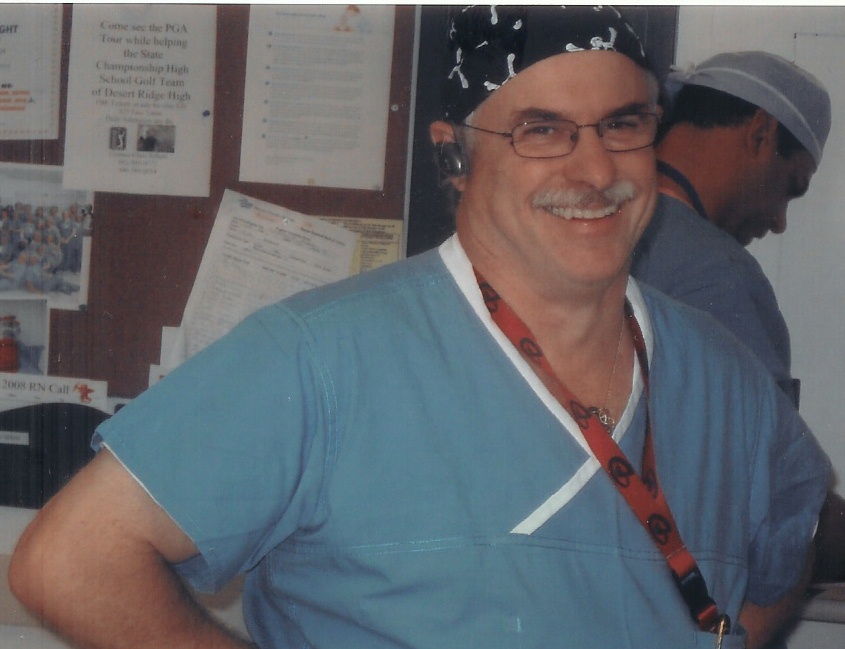
“Thank You For Your Service”
I
hear this often when people find out I’m a veteran. We all do. It’s become an automatic response for many people,
like ‘have a nice day’. I’m not complaining. It’s certainly better than the indifference or outright
hostility many of us experienced in the 70’s. But the statement is almost becoming meaningless as it is repeated so
often and automatically.
The thing is, I, and most veterans I know, don’t want thanks. Acknowledgement perhaps, but not necessarily
in the form of a thank you. I joined the Navy in 1973 for purely selfish reasons, not out of any sense of patriotism. I had
been accepted to medical school and had no way to pay for it. The Navy offered tuition in return for military service and
I took the deal. My time in service changed me. The Navy taught me to serve something greater than myself and the Marines
taught me to lead, two lessons that have defined my life ever since. After 14 years, I was a very different person from the
one I was before the Navy.
My wife, the wise woman, quietly accepts the thanks of others in the name of those
who aren’t with us anymore. I try to do the same, but am more conscious of the mix of good and bad that went with my
service. The costs were often high, and the rewards less tangible. My friends and fellow veterans will understand what that
means. Those who never served cannot.
Making the Cut
I have wanted to be a surgeon for as
long as I can remember. Despite that wish, I was incredibly naïve about the process of becoming one. I vaguely knew one
had to graduate from college and go to medical school, but even as a high school senior had no clue how one went about getting
into med school. There was an accepted premed track at the University of Illinois, but I blithely ignored it. Whether this
was out of hubris or willful ignorance, I am still not sure.
My choice of college was constrained by financial considerations. By the time I graduated from high school, I was
basically estranged from my family. The reasons for this are many and not terribly relevant anymore, but I was on my own from
the age of 18. I had won a state academic scholarship that would pay tuition and fees for any state school in Illinois, and
the U of I at Urbana was the only choice I considered.
I
was a very good student in high school. I learned early on that academic success carried rewards and could be my ticket out
of the chaos of my home life. I scored higher on the Advanced Placement Biology test than any other student in the state,
and 99% of those nationwide. I qualified for almost a full year of college credit before I even registered at the university.
My time in college was spent mainly in libraries
and study halls. I had friends; I even joined a fraternity, although our house was full of engineers and mathematicians who
thought complex technology based practical jokes were the height of humor. But at my core, I was a ‘grind’, a
student focused on studying to the exclusion of almost anything else. What was lacking in my education were the usual liberal
arts courses – history, philosophy, literature. I had a single introductory philosophy course and two semesters of a
foreign language (Norwegian, which I have totally forgotten other than a couple of stock phrases) in order to fulfill basic
requirements. Otherwise, it was all science and math. Everything on the prerequisite list for most med schools and a lot more
physiology and biochemistry than necessary.
I studied
obsessively. I took practice tests for fun. In the end, I finished a degree in physiology in just three years. I also scored
highly on the Medical College Admissions Test. I thought I had it made.
Little did I realize that every other prospective medical student was working just as hard as I was, and most of
them had a PLAN. They were carefully cultivating professional recommendations and research credits and extracurricular activities
to round out an entire ‘package’ for an admissions committee. All I had was good grades and a high MCAT score.
Both were a dime a dozen among medical school applicants.
I
applied to seven schools, not an excessively long list but more than many and the limit of what I could afford. (Application
fees ranged from $150 to over $1000). I was asked to interview at four, which in retrospect should have surprised me. I didn’t
have the polished CV that many of my peers boasted. I suspect a couple of good recommendations from a physiology professor
and a friend’s father, himself a surgeon, may have helped. I was full of confidence that my medical
career was in the bag.
Then came the rejection letters.
First Harvard, which was OK since I didn’t really want to go there. Then Stanford followed by Duke, Wake Forest and
the Medical College of South Carolina (My girlfriend of the time had moved to Charleston. Not a good way to choose a school
but I was in love). That left only the University of Illinois College of Medicine. In November, I got a thin letter from the
admissions office. My heart sank. Thin letters meant rejection. Thick letters contained registration paperwork and meant you’d
been accepted.
I didn’t open the letter right
away. I wandered the Quad for a day, thinking, worrying, and trying to plan my next move. I decided I would remain an undergrad
for another year and add biochemistry to my degree, retake the MCAT and try to cultivate some more professors for recommendation
letters.
I went home and opened the letter, expecting
the usual ‘thank you for your interest but . . .’ Instead, the first word was ‘Congratulations’. I
was in. Registration information would be sent separately once I confirmed my acceptance of admission. I sent back the little
post card enclosed with the letter confirming that I wanted to go to their school within an hour. I had made the first cut
of my career.
First Duty
It was 1979 and I was sitting in a cold,
noisy cargo hold aboard a C-141. Around me were twenty other men, all new transfers to Diego Garcia or to Naval Mobile Construction
Battalion 5, my new duty station. We had been airborne for almost 8 hours after leaving Bangkok and before that had flown
5 hours from Clark AFB in the Philippines. According to the garbled voice over the aircraft’s intercom we were on final
approach and this particular slice of hell was almost over.
This
was my first of many flights on the venerable ‘time tunnel’ as the big cargo planes were called by those unfortunate
enough to be passengers. The windowless holds were poorly insulated and indifferently heated. The temperature inside hovered
a bit above fifty degrees, better than the outside temperature of minus 30 but still bone chilling after a few hours.
Half an hour later, the cold would have been welcome. Diego Garcia is
a tiny atoll in the middle of the Indian Ocean. Eight degrees south of the equator, it is the very epitome of a tropical island.
We stepped out of the still cold plane into blazing sun and ninety-degree heat. The humidity was within a soaking 95% and
there was no shade for a mile in any direction, the native palms having been clear cut for the construction of one of the
longest runways in the world. After a long half hour we were finally picked up by a trio of trucks for the three-mile trip
to the Naval Support Facility and my new home.
NMCB-5
was the deployed unit responsible for new construction on the island. They had finished the runway before I arrived and were
now involved in several major construction projects. There was the fuel pier, the new barracks and the infrastructure and
utilities project. I was joining them as the new battalion medical officer.
Four weeks earlier, I had finished my internship at Bethesda Naval Hospital. I wish I could say it had been a good
year, but that would be a lie. I was bitter and disillusioned. My peers and I had been regarded as temporary labor by most
of our senior colleagues at Bethesda. We all knew that we’d be leaving for at least a year with an operational unit
after the internship year and that only a few of us would be back. The rest would serve out their obligated service time as
GMO’s (General Medical Officers) and leave the Navy to train in civilian programs. There was little attempt to encourage
us to return and the prevailing attitude seemed to be that the only difference between a surgical intern and a cow pie is
that no one went out of their way to step on a cow pie. On top of that, my brief first marriage of just eighteen months was
over. My ex had emptied the joint bank account, diverted the household goods shipment to an apartment in Chicago and, rumor
had it, had moved in with an old boyfriend. I was literally broke and everything I owned was in my seabag and a footlocker.
My intention was to serve my four years, and then get a job. I would
save my pay and make enough money to buy a sailboat and sail around the world. It wasn’t a practical ambition, but I’d
done the proper, conventional thing in order to get through college and medical school. Now, I was going to do what I wanted.
The trip to the battalion headquarters was short, but I was soaked with
sweat by the time I reported to the C.O.’s office. The Captain didn’t seem to notice. He shook my hand and heartily
welcomed me aboard. We made some small talk about the flight, and about Bethesda, where he had been a facilities engineer
in the early sixties. He handed me off to his aid, a bored looking ensign who in turn handed me off to the Chief Petty Officer
at the medical facility. Chief Harders was the first indication I had that this was real and I wasn’t in training any
more.
“First,” he said. “We need
to get you into a proper uniform.” I was in travel khakis and the uniform of the day was green fatigues. “We have
a supply meeting with the S4 at 15:00. They’ve been shorting us on paper products and for the last two weeks, we haven’t
had an officer to stand up that twit ensign over there and get us our full requisition. Then the Master at Arms has Petty
Officer Race in the brig. He’s our only Public Health technician and if you don’t get him out, the reefer inspection
won’t get done and you’ll have to shut down the galley until it’s certified.” He smiled at the stunned
look on my face. “Don’t sweat the small stuff, Doc. I’ll run the clinic, you take care of the officer stuff.
OK?”
Over the next two weeks, I got a crash course
in running a battalion medical department. I had a budget of several thousand dollars to account for and responsibility for
several hundred thousand dollars worth of equipment and supplies. I had a division of twelve corpsmen to lead, discipline,
and supposedly mentor and counsel on everything from medical procedures to financial responsibility.
I quickly realized that the C.O. didn’t want excuses. He didn’t care
that I had never done this before. If I didn’t know the answer to a question, the only acceptable answer was “I’ll
find out, sir”.
I met the rest of the officers
and was put in a berthing hut with three of them, all Lieutenants, like me, and all company commanders in charge of several
squads of men. I found out quickly that they were all really smart guys. They had good engineering educations and had been
in the Navy for five or six years. They knew their jobs and did them exceptionally well. Excellence wasn’t just a goal
to them, it was a standard.
And they treated me as an
equal. I was a division officer, technically senior to them in the chain of command even though I was clueless.
About a month after reporting in and just as I thought I was getting
a handle on my job, the embassy crisis in Iran geared up. This was just after the Shah had been ousted and a bunch of fundamentalists
took over our embassy in Tehran.
The C.O. called an
all officers meeting after getting a flash message from CentCom. We were put on Defcon 3 and orders were given to prepare
the battalion for mount out. Which meant someone thought we might go to war. After an hour or so of readiness reports from
the various line companies, the C.O. turned to me and said, “Doc, what’s our readiness plan for casualty clearing
and evacuation.” Fortunately I knew the answer (the Chief had spoon fed it to me just before the meeting. God bless
Chief Petty Officers). That’s when I stopped playing officer and really felt that I had become one.
My attitude changed after that meeting. I was determined to do the job
to the utmost of my ability, just like the other officers around me were. And I was determined to go back to Bethesda and
complete my surgical training. If I was going to be a combat medic, then I needed the best surgical training I could get.
In the end, Command decided not to send us into the Iranian desert to
build an airstrip for a rescue mission. The logistics were too daunting and the combat power too uncertain. They did load
the battalion onto an LST and float us around the Horn of Africa for two weeks before standing us down.
Although we didn’t see combat in the end, for those two weeks, the prospect
was very real and I came away with a new outlook on my job and on life in general. I was serving something greater than myself.
People had counted on me to lead them in a situation that might involve life or death decisions. It was heady and humbling
at the same time, and the knowledge that I could do it changed the way I looked at problems forever.
Nostalgia
Faulkner
said, “The past is never dead. It’s not even past.” Nostalgia steals into your thoughts like an old song.
When the song was fresh, it was vibrant and alive and full of meaning. Once forgotten, it can return as a haunting melody
that tries to pull you back into a world that might have been but never really was the way your memory recorded it. Sometimes
it’s bittersweet. An old remembered pleasure, a memory of innocence and a gentle longing to return. But sometimes the
gulf between who you were then and who you have become is too great to be bridged. The pull of nostalgia becomes a deep pain
the resurrects all the might-have-been’s and brings back the events and the deeds that changed you from what you were
to what you are.
Baseball
and Hope
It’s spring and Baseball has started. I went to the Arizona Diamondbacks home opener last night and found a
gentle renewal of hope. Even though they lost, blowing a middle inning lead in the sixth, the rhythms and optimism of the
game, especially the first game of the season, were invigorating.
For me, spring baseball has always been about
hopeful expectations. Your team may have ended the season in the cellar, but each new season brings new hope. Maybe this year
we’ll win the division. Maybe we’ll top .500 for the season. Anything seems possible.
I’ve had a tough couple of months
lately at work. I worked harder for less income last year and the winds of change coming out of the ACA and the insurance
industry don’t look friendly to the individual practitioner. We’ve had a run of tragic and difficult cases on
the trauma service and I’ve lost some of my usual objectivity in the face of it. Things are changing in the hospitals
were I work, and not for the better, but I can’t seem to do anything to reverse or stop it.
I really needed a night out, and Opening
Day was perfect. The grass was green, the uniforms were crisp and white, the beer was cold and the dogs were hot and all seemed
right with the world. At least for a few hours, there was hope. Batter up!
Mother’s Day
Mother’s Day is always a bittersweet occasion for me. On the one hand, my wife, the mother of my two sons, deserves
recognition for the amazing mother that she is. She is the glue that holds us together and her strength and unconditional
love for her sons has always been a safe haven for them.
My own mother committed suicide when I was in high
school and had not been emotionally stable enough for several years before her death to provide that kind of love to my siblings
and me. At fifteen, I thought I was beyond needing a mother and soon left home altogether because of the simmering hostility
between me and my father. I regret that decision now, as I abandoned my brother and sisters in the process.
Over the years, there were several stepmothers who tried to fill the role my own mother had abdicated, but I never felt
a strong connection to them. The closest I have come to a mother figure in my life since then has been my mother-in-law.
I know, weird. Mother-in-law jokes aside, she has always been a strong presence in my wife’s life. It’s
a traditional Italian family and holiday gatherings, the traditional Sunday dinners, the daily phone calls, have been a part
of our lives for thirty years now. It doesn’t hurt that in her eyes, I can do no wrong. (The down side is that in her
eyes, my wife can do no right, so there is some strain there) She has always gone out of her way to make me feel loved and
wanted in her home.
So although my own mother is long gone, I celebrate my wife for her devotion to our own
children and my mother-in-law for her role in making my wife the wonderful person she is today. Happy Mother’s Day to
both of them.
PTSD and the Trauma Surgeon
Over
the past week I’ve experienced increasing sadness and a feeling of futility. It began with the chance discovery of an
obituary for the father of an old high school girlfriend. He had a surprisingly big influence on me, although I was only partially
aware of it at the time. He was the kind of guy who was good at almost anything he tried. He had 4 kids and his family, at
least from my outsider’s perspective, seemed supremely stable and happy. He clearly loved his family and made times
with them special. I was included in some of those times and was impressed by his quiet acceptance, gentle discipline and
self-control and above all, his sense of fun. It was such a contrast to the chaos of my own family life that I found I wanted
to be part of it. My girlfriend even gently chided me at one point about the ‘courtship ritual’ and how the guy
in the relationship was expected to take his girl out on at least a few dates. All I wanted to do was hang around her house
with her family. As early life relationships often do, ours ended when we moved to separate cities, separate schools, and
I’ve heard nothing from her for close to 40 years. But her father’s example of what a family man could be stuck
with me and I realize now that it had a lot to do with how I tried to be a good husband and father myself.
Why
would such a discovery touch of feelings of futility? Perhaps because of a world that I once dreamed of that never came to
be. Don’t get me wrong, I don’t regret my life, and I love my wife and family as dearly as life itself. But in
reading about his life, its successes and the obvious success of his children and grandchildren, I felt as if my own efforts
had come up wanting.
I have been so focused on my work and on a constant drive to be the best I could be, that I think I forgot that life
is supposed to have a generous measure of fun in it.
Yesterday while driving home, I got
a call from the hospital about a routine matter on a critically ill patient. As I was talking to them, my youngest son called
as well. I quickly settled the question with the hospital and switched calls to my son, expecting some crisis or another.
He just wanted to remind me to stop at the store for some things he wanted. This was the third time he’d called that
afternoon with the same message (autistic kids do things like that) and I lost my temper with him since I’d already
told him twice before that I would stop. I hung up after the call and was suddenly overwhelmed by a rush of shame, despair
and a feeling of loss so powerful that I had to stop the car and cry. Images of dead and dying patients flooded my head for
reasons that I still don’t understand. I felt as if I had wasted most of my life pursuing an illusion and that the cost
to my family and myself had been too high for too small a gain.
We all have regrets about our life
choices, even the good ones. I know that. But my reaction to the regret I felt and the flood of memories of all the times
I failed to save a patient was completely over the top and frightening. Somehow my worth as a person has gotten all mixed
up with my worth as a surgeon. There seems no separation or balance anymore. I still haven’t recovered my equilibrium.
I have never placed much credence in PTSD as a disabling condition. I know it is a real response to traumatic events
and that people may be profoundly affected by those experiences, but I always felt that one recovered by soldiering on and
drawing on ones strength to learn from the traumatic event. I have often felt helpless and inadequate when faced with a patient
who was so ill or injured that I could do nothing to help. You learn to deal with it, to put it in a box and learn what you
can and move on. Yesterday the box opened and dumped a load of pain on me. I’m still struggling to understand it.
2/14
Gun
Control and the Real World
A high school acquaintance and Facebook friend who regularly comments on Huffington Post recently posted a heartfelt
essay on gun violence. (see http://www.huffingtonpost.com/lorraine-devon-wilke/forget-any-other-argument_b_4598274.html?utm_hp_ref=fb&src=sp&comm_ref=false#sb=1468893b=facebook). I responded in my usual fashion with statistics and legal citations. Others responded and even suggested I view a YouTube
video of people talking about the personal effect of the violent deaths of their loved ones. As if I didn’t ‘get
it’. I am posting this response on my own wall rather than hers in part because it is long and in
part because I don’t want to spark further confrontation on someone else’s domain.
I realize that my initial response
was wrong. The essay wasn’t about real solutions to gun violence. It was an appeal to emotion, to a common sense idea
that if the gun were taken out of the equation, the personal confrontations that had resulted in a death would have been less
lethal. The idea is indisputable – guns escalate the potential lethality of any situation.
And believe me, I ‘get it’
when it comes to the personal devastation of a violent death. I’m the guy who has to tell a family that the gunshot
wound their father/sister/brother/son inflicted on themselves was fatal and that they are gone forever. I’m the one
who has to tell the parents of a 16 year old that his brain has no reasonable hope of recovery and ask if they’ve considered
organ donation. I’m the one who is up to his elbows in someone else’s blood at two in the morning trying to staunch
the flood from a severed aorta. I am an intimate participant in our nation’s dance of violence and death.
I
am also a realist. ‘What if the gun weren’t there’ is little more than wishful thinking if it doesn’t
lead to a solution. The only real solution to the impulsive use of a gun in a confrontation or in a suicide is to remove guns
from the general population. And that is simply unrealistic in this country, at this time in history. Blame whomever you like.
I don’t care. There is simply no way that guns will go away any time soon. Bromides about mental health screening and
background checks are feel-good measures. They will likely stop some really bad or crazy people from acquiring a gun, but
that is a tiny minority of the people who use guns on their fellow humans. Most are regular people who succumb to a moment
of rage or bad judgment or despair that is then made tragic by the easy access to a deadly weapon.
I don’t offer a solution because
I don’t believe there is one; at least not one that is palatable to most people. Gun control? Sure. Gun confiscation
on a national scale? Um, wait a minute. And make no mistake, in order to stop all impulsive acts of gun violence, that’s
what it would take. If there is a solution, it will come through hard-bitten realism and careful analysis of the roots and
possible cures for what has become a public health problem. Not through emotional appeals to a national conscience that is
fleeting and inconsistent and abdicates it’s responsibility to nameless government functionaries.
2/9/12
The Obama ACA Mandates
The stupid and poisonous attacks mounted by Rush Limbaugh and Patricia Heaton on
Sandra Fluke following Flukes Congressional testimony have invalidated any reasoned opposition to the women’s health
mandates due to go into effect this year. Which is unfortunate, because the mandates are problematic in their implementation
and represent a major expansion of governments reach into the delivery and quality of healthcare.
At the risk of arousing the ire of many of my female friends, I will attempt to discuss how we got here and outline
some of the real problems with the mandates issued by HHS which will define what services must be offered by health plans
in order to comply with the provisions of the Affordable Healthcare and Patient Protection Act.
So how did we get here? When the Affordable Care Act was passed, it included considerable attention to preventive
care, for the first time stipulating that new private plans cover a wide range of recommended clinical preventive
services to plan holders without cost-sharing. Specifically, this section of the law (2713) requires that private plans cover services
that receive a strong recommendation from the U.S. Preventive Services Task Force (USPSTF); vaccines recommended by the Advisory
Committee on Immunization Practices (ACIP); preventive services for children recommended by Bright Futures guidelines for
pediatric preventive care; and “with respect to women,” new services that will be identified by the Health Resources
and Services Administration (HRSA). No specific mention is made in the law to contraceptive services. In 2010, the Department
of Health and Human Services (HHS) requested that the Institute of Medicine (IOM) convene a committee of experts in women’s
health and prevention to identify gaps for women in the current preventive recommendations.
The IOM committee identified eight new preventive services for women, including screening for intimate partner violence, well woman visits, breastfeeding supports as well as the inclusion of
contraceptive services and supplies, including all methods approved by the Food and Drug Administration. These recommendations were adopted by HHS in August 2011. Contraception is also recommended as a part of health care for women by the nation’s leading health care professional
associations, including the American Medical Association, the American Congress of Obstetricians and Gynecologists, the American
Academy of Pediatrics, and the American Public Health Association.
So far, so good. The Institute
of Medicine is the medical advisory arm of the National Academy of Science. It is generally a respected source for determining
best practice guidelines and comparing the safety and effectiveness of different therapeutic measures. They offer several
levels of advisory documents ranging from ‘letters’ which are brief consensus statements about one particular
device, treatment or approach to a problem, to ‘recommendations’ which are their consensus statements on the correct
approach to a large medical or public health problem. The Institute doesn’t claim to be completely free of bias, but
is independent of any government agency and is funded through donations and the sale of their consensus papers. They nevertheless
carry great weight with healthcare organizations many of their guidelines are standards of care for the problems they address.
That said, the recommendations made to HHS regarding women’s preventive healthcare are groundbreaking and depart
significantly from previous guidelines and recommendations. There are two issues with the eight preventive services identified
by the IOM. First, there is little data or experience to suggest the recommended services will have the desired effect. They
make intuitive sense, but many things that make intuitive sense turn out to be impractical or even unintentionally harmful
in their implementation. Most recommendations issued by the IOM, at least those that deal with clinical guidelines, identify
the source material on which they are based. The studies are classified as Level 1 (derived from controlled randomized scientific
trials) Level 2 (derived from clinical studies with historical controls or non-randomized linear studies) Level 3 (generally
accepted practice supported by long-range outcome data) or Level 4 (expert opinion). Support for the eight specific services
recommended the HHC for women’s preventive care range from Level 2 data (recommendation 5.1 – screening for gestational
diabetes; and 5.2 –screening for HPV) to Level 4 (5.3 – counseling on STD’s; and 5.7 – domestic abuse
counseling). The assumption is that these measures will have a positive effect is reasonable but has not been validated or
studied.
Why is that important? After all, these sound like good ideas that would be of
benefit to many women. The problem is that these are not guidelines – standards that are recommended and that most insurers
and practitioners would try to abide by. They are mandates. Once HHS adopted them wholesale, they had the force of law. Whether
they are effective or not, whether they can be practically implemented or not, they MUST be done in order to qualify for Federal
funding and certification.
Which leads to the second issue: Implementation. Even
good faith efforts to meet all of the recommendations will likely fail for lack of resources. For instance, recommendation
5.7 requires screening and counseling for interpersonal and domestic violence. Sounds good, important even. Domestic violence
is the leading cause of death and injury for women 21 to 30 years of age. I see and deal with this every day as a trauma surgeon.
We try to refer victims to counselors and social workers to get help, to get out of their living situations. But there aren’t
enough counselors or social workers to deal with the demand. Waiting times for counseling appointments may be several weeks.
Space in shelters may take even longer to find. Increasing demand simply cannot be met with current resources and there is
no funding in this bill to train more counselors. Mandating a thing doesn’t necessarily make it so.
An examination of each of the eight recommendations reveals serious issues with many of them.
5.1 Screening for gestational diabetes No major controversy here. Most prenatal
clinics do this anyway. This is supported by both Level1 and Level 2 studies and is the standard of care for primary care
and OB-Gyn.
5.2 The addition of high-risk
human papilloma virus DNA testing in addition to cytology testing in women with normal cytology. This is state of the art
testing but is of unproven benefit. There are Level 1 studies suggesting earlier detection of high-risk patients and more
frequent screening for them may detect cervical cancer earlier, but right now this is unproven. We thought routine PSA testing
for prostate cancer would be useful, too, but it hasn’t proven to be of enough benefit to justify the costs.
5.3 Annual counseling on sexually transmitted diseases
for sexually transmitted diseases. Again not much controversy, standard of care, as long as you document it.
5.4 Counseling and screening for human immunodeficiency
virus (HIV) on and annual basis for all sexually active women. Really? This seems to recommend annual HIV testing for every
sexually active woman in the country. That at least is the generally accepted meaning of ‘screening’ in the medical
community. If they mean something else (asking “Are you engaging in unprotected sex with multiple partners?” for
instance,) they should use another term. I actually believe that annual testing WAS the intent based on supporting documentation
in the full text of the report that states ‘there is a bias toward gay men in the routine testing for HIV exposure that
discounts the risk of unintentional exposure in sexually active women”.
5.5 The full range of FDA approved contraceptive methods, sterilization procedures, and patient education and counseling
for women with reproductive capacity. This is the ‘contraceptive mandate’ that has caused much of the controversy.
More about that later. The problem with this recommendation that is overlooked in the shouting is its sweeping generality.
No other healthcare mandate requires that ALL methods of providing a particular type of care be provided. Not cancer care,
chemotherapy, cardiac care, treatment of hypertension nor diabetes has such a sweeping mandate. Why was this aspect of women’s
health singled out for special treatment? At its most literal it can be interpreted as requiring health plans to offer every
contraceptive medication in the formulary plus over the counter methods at no charge to their insured. At the least it will
require a representative drug from each class be offered as well as every IUD, sponge and implant made. Sweeping and unprecedented.
5.6 Comprehensive lactation support and counseling and
the cost of renting breast feeding equipment. A trained provider should provide counseling to all pregnant women and to those
in the postpartum period to ensure successful initiation and duration of breastfeeding. Again, a sweeping mandate showing
the bias on the part of the authors against bottle feeding. This is based in good science showing the superiority of breastfeeding
but goes way beyond current standards and assumes that all women want to breast feed their infants. Further, there is no training
standard for these providers. A boon to the La Leche League and similar groups but not a practical mandate.
5.7 Screening and counseling for interpersonal and domestic
violence to include solicitation from women and adolescents about current and past violence and abuse in a culturally sensitive
and supportive manner. This is a wonderful idea, but not the job of primary care or OB-Gyn providers. As medical professionals
we do not have the cultural of sociologic training to deal with these issues. This is the purview of social work and psychology.
Putting this burden on healthcare providers is unfair and as likely to elicit resistance as cooperation. And there are not
enough trained counselor and psychiatric social workers now to do this job.
What emerged from the IOM
report is a sweeping change in the role of government in mandating specific healthcare measures. These recommendations were
adopted without debate or discussion and will be imposed on the medical community this year. We will be required to document
compliance with these measures for each and every patient; an additional burden in record keeping a separate reporting that
will cost time and money. And if studies show the recommended interventions are ineffective, it will be a cold day in hell
before they are changed.
Government mandates are not new in healthcare. For the
past four years, for instance, the practice of surgery has been under a set of mandates called the Surgical Care Improvement
Project (SCIP). These mandates require specific antibiotics be given for certain procedures and specify the timing of when
they are started and when they need to be stopped. Other mandates require the routine use of low dose anticoagulants to reduce
the risk of deep vein clots and pulmonary emboli (clots that travel to the lungs). They also require that urinary catheters
be used only for specific problems and be removed in a specified period of time. An 85% compliance rate was required or Medicare
and Medicaid funds will be withheld. Two large longitudinal studies published this year looking at several hundred thousand
patients have proven that the mandates are ineffective. There has been no effect on the rate of surgical infections and the
number of DVT’s has been reduced by a whopping 0.5%. Pulmonary emboli have not been affected at all. Compliance has
cost hundreds of thousands of man-hours in documentation and implementation and an unknown amount of money (estimated by the
VA to be in the millions) for no gain. So what does CMS, the government agency that runs Medicare,. do? Do they rescind the
mandates? No, they increase the compliance requirement to 95% so we can waste more money complying with irrelevant mandates.
This is my greatest concern with this new set of rules.
Many sound laudable in intent. But they are sweeping in scope, may cost millions to implement and document and as yet have
little data to back their efficacy. Past experience with similar mandates has shown that once they are in place, documentation
of compliance overshadows actual performance of care.
8/18/11
Who Speaks for Me?
Our country is not a democracy. By design, the Constitution
set up a representative Republic, not a pure democracy. The framers of the Constitution, for all their talk about the rights
of the individual, understood that freedom without the discipline of careful reflection is the path to chaos.
We have a system where
our Representatives in Congress are supposed to speak for us in the seat of power and look after the rights and interests
of their constituencies. Despite Washington’s warnings about the dangers of factionalism and the establishment of political
parties (I’m talking about the man here, not the city), by the end of his second term a strong two party system of political
power had emerged.
Flash forward two hundred and eleven years and we have an increasingly polarized Right/Left political division. It’s
not the first time in our history that the divide between the major parties has been this sharp, nor is the current division
any more acrimonious than say the split between the Whigs and the Democrats in the days of Andrew Jackson, or the Republicans
and Democrats in the years before the Civil War. We perceive a more acrimonious atmosphere because of the 24hr news cycle
and the relatively bland politics of the preceding 20 years. The period from the early fifties through the late eighties was
unusual for it LACK of political acrimony.
So who speaks me in our Republic? I’m a white middle-aged male professional.
You might say I need no one to speak for me since I’m clearly one of the privileged elite. I’m one
of the people who run things, right? Except I’m not. I’m asked to pay for a lot of stuff, but have little say
in how the money gets spent and on whom.
Given my demographic, the conservatives should speak for me. But I have little use for the religious
right. I am not a religious person and don’t believe that theology has any place in politics. Morality may have a place
but morality is not dependent on theology. I am not an atheist, even though I don’t really believe in God. An atheist
actively denies the existence of God. I simply don’t know nor do I care about God’s existence. The universe functions
quite well on its own without Divine intervention. As long as the ‘conservative’ party in national politics is
help hostage to the religious right, I have no place within it.
I must therefore be a liberal, right? Not really. I believe in VERY limited government.
I support social liberalism as far as the freedom to choose one’s sexual preference, lifestyle and personal habits is
concerned and don’t believe we can or should legislate personal morality. I believe abortion should be safe and legal,
but not necessarily free. I believe in personal responsibility and the concept of accepting the consequences on one’s
choices without expecting to be bailed out or helped if that choice was wrong. As long as the ‘liberal’ party
in national politics believes that government has the duty to intervene in people’s lives whenever misfortune or (more
often) stupidity causes them suffering, then I have no place in it.
The libertarians offer no voice either. They appeal to my sense of individual liberty
and responsibility, but I don’t believe that private ownership of everything is a practical way to run a country and
isolationist foreign policies have never worked in a world where others wish us harm.
So where do I turn?
I believe our government is out of control and no
longer acts in the interests of the nation. I believe that ALL spending should be discretionary. There should be NO ‘entitlements’.
Social security, Medicare, direct payments of money or services of any kind from the government to citizens should be renewed
yearly. All spending should be sundowned at a specific time, no more than two or three years.
I believe the War Powers Act should be repealed.
Military commitments should be made only when there is a clear and present danger to our country and should require a formal
declaration of war. We need a robust and all volunteer military, but it should be used by people who understand war and killing,
not by politicians. We are not in the business of ‘nation building’. Humanitarian interventions are not the business
of the military. We should go to war only when out security is threatened and then with overwhelming force. Once the threat
is removed, we should get out and come home. We are not the world’s police force.
I believe that who you love and who you marry is
your own business, not the government’s. Same sex marriage, at least in the civil arena, should be a non-issue. The
government can’t compel churches to change their doctrines, but anyone should be able to go to the local justice of
the peace and get married.
I believe abortion should remain safe and legal. But I also believe that we should recognize that
abortion kills a potential human. We can agree that the mother’s rights trump those of the fetus until the age of viability,
but the decision to end a pregnancy is not morally neutral.
I believe that income tax is inherently unsound as a fiscal policy. It penalizes savings
and investment, skews the responsibility for payment to a smaller segment of the population and pits those who pay little
or no tax against those who pay the bulk of the taxes. A tax on consumption is fiscally sound and necessarily limits the power
of government. Income tax allows the politicians buy support from interest groups through tax breaks and handouts. Consumption
tax is blind. It doesn’t care who spends the money, so can offer no advantage one way or the other.
I believe in a strict
interpretation of the Constitution. The tenth amendment is just as important as the first and should not be forgotten.
I believe that the government
exists to make war, coin money, build and maintain infrastructure, grant patents, ensure basic clean water and food and support
public health. Other interventions into public interactions or private lives should be viewed with healthy skepticism and
should have limited and specific goals.
I currently have no use for either political party. They are two sides of the same coin pandering
to an electorate that is too easily swayed by emotion and demagoguery.
We have forgotten our history, we ignore the lessons of civilizations that went before
us and live in a perpetual adolescence where the penalties for stupid behavior are regarded as ‘misfortunes’ or
‘disadvantages’.
Who speaks for me?
1/3/11
New Years
Reflections
I
wrote a year ago about my reflections on the New Year 2010. Despite ongoing change and concerns about the direction of the
practice of medicine and of the country in general, I was generally upbeat. I counted my blessings, as it were: I’m
healthy, I have a good marriage and home life, I enjoy the respect and confidence of my peers and I’m making a good
living doing something that I love to do.
All those things are
still true. My relationship with my wife has grown and deepened as she has come into her own as an independent professional.
I’m still carrying more debt than I like but it’s manageable and I haven’t had to seriously curtail
my lifestyle (which is modest in any event). And I’m gratified by the continued respaect and confidence in me
shown by my peers.
But my mood as I start this New Year 2011 is
less confident and optimistic than it was a year ago. There are great changes afoot in my chosen profession and in the community
where I practice. Change is always unsettling. Change that is totally beyond your ability to predict or control is downright
frightening. Between the restrictions and new requirements being imposed by the government under the new Health Plan and the
reaction of hospital administrations to them, the solo practitioner like me is left with a feeling of helplessness.
There is no question that physician reimbursements will be cut. Fair enough.
Tell me what the cuts will be and where and I’ll adjust. But wait, we don’t know where the cuts will be made or
how much they will be. We don’t even know if and when they will occur. That makes strategic planning for the year ahead
very difficult. Should I hire or fire employees? Should I put more money aside for new expenses or invest in new equipment?
How much should I pay on my estimated quarterly tax? I can adjust a lot of the financial issues on the fly as we see how this
will work out. It’s the unpredictability that is hard to manage.
More
disturbing to me is the continued expansion of ‘guidelines’ on the way that I practice. This year there will be
a literal doubling of so called ‘never events’. Events that CMS, the government watchdog that runs Medicare and
controls reimbursement, says should never occur. Unfortunately, a certain number of these events are inevitable and CMS knows
this. No matter how good we are, no matter how conscientiously we adhere to good practice guidelines some of these complications
will still happen. And yet CMS says we will be penalized if they do. There is a deep cynicism in that approach. They set an
impossible goal knowing that no one can meet it so that they can justify not paying for the care patients receive if one of
these events does occur.
The electronic medical record is being
forced on us with little evidence to support the claims that it will reduce error, streamline care or improve outcomes. One
thing it will do is cost several thousand dollars to implement in my office. Money that is an expense for me that the government
vaguely promises to reimburse, although there is no mechanism in place yet to do that. Nor is there any standard format for
the records or assurance that I won’t be required to switch to a different system at some time in the future. But if
I don’t computerize my records by the end of 2012 I will be penalized with a 5% cut in reimbursement from Medicare,
increasing to 15% by 2015. I am not a Luddite. I am not against electronic record keeping in general. But as yet, I have not
seen a medical record system that works well. They are all overly complex, cumbersome to use and difficult to learn. And for
a surgical practice, they offer little advantage. My patient encounters tend to be short and focused. I see the average patient
only once or twice in the office and then never again. I don’t need a system that tracks multiple medical diagnoses,
multiple visits and multiple medications. I can do very well with a couple of dictated notes, processed
as text documents and stored on a disc.
In reality, the electronic
record is not about efficient patient care. It is part of a larger effort by government, insurance companies and regulatory
agencies to gather data and track patterns of care. I believe the ultimate goal is to use that data to compel individual physicians
to practice the way the government wants us to practice using sanctions and reimbursements to get their way.
We are already seeing this in the hospitals. Doctors who don’t toe the line on ‘practice
guidelines’ and ‘core measures’ get annoying letters reminding them of the party line
and threatening ‘credentials action’ if they don’t ‘improve their performance’. Be good or we’ll
haul you in front of the credentials committee and suspend your hospital privileges. Never mind that the guidelines are often
arbitrary and have more to do with cost savings than best practices.
So,
my predictions for 2011 and beyond: More physicians of my generation will leave the practice of medicine or stop seeing Medicare
patients. Younger physicians will chose to be employed by hospitals rather than try to make it in private practice. Those
employed physicians will be less likely to work longer hours, above and beyond the requirements of their contracts. Why should
they? They won’t be paid more for it and the demand will only increase. Patients will face longer waits for appointments
and may find that some specialists won’t see them at all if they are on Medicare or some other government administered
payment scheme.
10/5/10
THE TROUBLE WITH FREEDOM
In my heart, I am a libertarian.
I believe in individual freedom and individual responsibility. I believe in limited government--severely limited government.
I am not a fan of either political party in this country, but can think of no other place on earth that combines both the
protection of individual rights and political stability that this country offers.
That said, I am tired of the exercise of freedom being a license
for stupidity. Yes, you are free to drink yourself into oblivion every weekend. But don't get behind the wheel of a car
or a powerboat when you do so. Don't decide you are superman and can leap from a roof or a cliff into shallow water. Don't
get drunk with people you don't really like and decide to tell them off. Especially if they're bigger and more sober
than you. I know this is a useless appeal because you are too stupid to understand the consequences of your actions, but I'm
the guy who gets to patch you up after your adventure and am tired of hearing the same lame story time after time.
Yes, you should be free
to ride your motorcycle without a helmet. After all, freedom is what motorcycles are all about and that sense of free flying
with the wind in your hair is part of it. I know my appeal to stop a moment and think about what happens when an unprotected
head meets concrete even at low speed has no effect on you, but again I make it. In my more cynical moments, I can support
your decision if you'd guarantee that you'd become an organ donor. At least then someone would benefit from your stupidity.
You are free to supersize
your meals, buy all that wonderfully convenient fast food. I'm a big fan of Whataburger myself. If you are unable to exercise
restraint and self control you can always blame it on McDonalds. And when your diabetes and hypertension and heart disease
leave you unable to do more than sit on the couch and watch reality TV, you can always go on disability. Healthcare is a right,
right? So no matter what you do to yourself, someone else is obligated to pay for taking care of you.
Shouldn't we pass laws requiring motorcycle
helmets? Shouldn't we pass laws that forbid drinking and driving or operating machinery? Shouldn't we forbid motorcycles
entirely and unsafe at any speed? shouldn't we outlaw cigarettes and hi fat fast foods and sugar laden sodas? Ah, there's
the rub. Where do we draw the line? 'Reasonable people' agree with drunk driving laws and motorcycle helmet laws and
minimum drinking age laws. But 'reasonable people' can also be persuaded to ban particular foods or drugs or activities
as too risky. The world is full of zealous people of infinite good will who will try to convince me that an organic bran muffin
and herbal tea are just as satisfying as a Moon Pie and an RC Cola.
I know that personal freedom isn't an all or nothing absolute.
And I see daily the consequences of stupidity in the exercise of freedom, at least as far as trauma and personal health are
concerned. One of the arguments for universal health care is the cost of caring for uninsured patient who get sick from preventable
illness. I don't really agree with the position, since there is evidence that preventive care doesn't reduce costs.
It improves quality of life and delays catastrophic complications, but the actual cost of care is higher. That's an argument
for another time. My point is that to affect chronic stupidity, you need to pass laws that intervene directly in peoples personal
lives and choices. Helmet laws and drunk driving laws are reasonable and prudent, but what about smoking bans? What about
limits on the fat content in foods? What about government monitoring of a child's Body Mass Index in the school? What
about required end of life discussions with elderly patients? When do 'reasonable people' decide what you can and
can't eat in the name of protecting your good health?
The problem with freedom is that it includes the freedom to be stupid. Yes, society
ends up bearing the costs of stupidity. But there's no cure except the restriction of freedom, a step that requires more
forethought and nuance that I'm willing to trust to any government.
9/22/10
Suicide Ain't Painless
Some of the best advice I ever received as
a medical student was from my chief resident when I was an eager young third-year on my first trauma rotation. "Never
run to a gunshot wound to the head," he said. "They'll either survive until you get there or they won't
survive no matter how fast you run." The corollary to that axiom is 'Think donor. The life you save may not be the
one in the trauma bay'.
Gunshot wounds to the head are a particularly difficult type of trauma to deal with. When self inflicted, they automatically
create a lot of ambivalence for the trauma team. It's hard to work to save a life that the patient himself didn't
think was worth living. And shooting yourself in the head, unlike taking pills or cutting your wrists, is a statement of a
fairly serious intent to end your life.
Mostly it is an act of despair, although sometimes it seems understandable. Not
a choice I would make, but understandable for the patient. I am not a psychiatrist for a reason--I have little patience with
neurotics and depressed people whose only purpose in life seems to be inflicting their own misery on everyone else around
them. So depression, despair, loneliness, all the usual reasons people cite as the cause of their suicidal motivation don't
strike me as particularly valid reasons to put a gun to your head. In those cases, it's an act of supreme selfishness.
On the other hand, a patient faced with a long and debilitating and ultimately fatal illness may see suicide as a
rational act to avoid a futile and costly struggle that will have the same outcome in the end as a bullet in the brain. Again,
not necessarily my choice, but understandable. I'm a firm believer in property rights. The ultimate property right is
the right to decide what to do with your own life. If suicide seems a rational decision, I support your right to make that
choice. Just get it right the first time and make sure no one else is hurt in the process.
That last part is the real
problem with suicide. It may seem right to you, but even the most rational suicide harms those whom you leave behind. Death
and grief go hand in hand, but sudden death leaves little time for the survivors to prepare or accept the loss. The thought
that you would deliberately choose death over staying with people who care about you is doubly hard for the survivors to accept.
It's a very personal type of rejection and all the rational arguments about why you did it don't change that.
As
a trauma surgeon, I give families bad news on a regular basis. It isn't something that I'm particularly good at. I
tend to be very clinical and although I try to put things in terms a that are easily understood and give an honest assessment
of the patients prognosis, I'm not good at offering comforting words or expressions of sympathy. Harder still is the discussion
of brain death and organ donation. I believe in donation. I encourage everyone to become an organ donor. But I'm lousy
at broaching the subject with families, even though it's supposed to be part of my job. Thank God for the nurses at Donor
Network who do that sort of thing very well.
8/26/10
A Luddite Speaks Out
We're now four weeks
into the switch to an all-electronic medical record at my primary hospital and the pain continues. Instead of getting better
at using the new record system, I think I'm just getting numb. I know I'm depressed. Depression is redirected anger,
and I know I'm angry. The problem is, there is no way to release that anger because the people responsible for pissing
me off are a nameless/faceless 'them'. 'They' are the corporate idiots who decided to buy a poorly designed,
antiquated, and cumbersome medical records program that violates every rule of human-computer interface ever devised.
Without going into exhaustive
details about what's wrong with the system, just let me say that many of the physicians I work with are much more
tech savvy than I. And I have yet to find anyone in the hospital who likes this turkey, much less has found it satifactory
for his/her daily needs. The interface is confusing and poorly organized, the navigation is counterintuitive and requires
clicking though multiple screens to perform even the most mundane tasks, and the order entry system is organized around the
department receiving the orders rather than being easily searchable by test or class of order. (For example, to order intravenous
nutrition I have to search the 'consult pharmacy' menu rather than the IV fluid menu or the nutrition menu).
Conditional orders, such as 'If xyz occurs do the following and call me' are not allowed. Instead, I have to write
a 'nurse communication' notecard and post it to the chart and then wait for the nurse to read and acknowledge it.
I am not against technology.
I am also not computer-phobic. (I'm doing this website, am I not?) But this is not progress. This is insanity. I am being
turned into a ward clerk, trapped in a never ending cascade of drop down menus and dead end order entry screens. The mantra
chanted by the hospital administration is that Computer Physician Order Entry reduces medication errors by eliminating the
middle step of having a clerk send the written order to the pharmacy. Maybe. But what I find is that if the physician clicks
the wrong box and sends a mistaken order to the pharmacy, it's filled without question. The Doctor ordered it so it must
be correct, right? And when the order entry process is so complicated that it takes six hours of training to understand how
to work it, something is wrong with the system.
What they should have done, IMHO, is take a cue from Amazon. Order entry is no different than shopping--you look
for what you want and order it, one click sends it to your shopping basket (pending order box) until you check out (electronically
sign). Instead of cumbersome, complex proprietary code that only the program vendor can understand, write the system in HTML
or some other open source code so that your in-house IT people can tweak and adapt it to local needs. Do notes in Word or
RTF or some other popular document software so that it is easily edited and can be sent in e-mails or blast faxes to doctor's
offices.
This
system can't talk to any other system. I can't upload my office records which are stored as Word Document files directly
to the hospital record. I have to print them out, fax them to the hospital where the paper copy is scanned into the hospital
record. Stupid! What happened to the universally accessable electronic record that was supposed to make it simple to share
information with other clinicians and eliminate duplicate efforts? Forget about it. And now I learn that the CEO of the vendor
who sells this system is on the Board of Directors of our hospital. Can you spell 'conflict of interest' boys and
girls? How come I can't get reimbursed by the hospital for free care provided to illegal immigrants because it would violate
the Stark Law (which forbids 'sweetheart' deals and kickbacks to doctors from hospitals) but this guy can sell his
product to an institution where he holds a vote on what to buy?
I have said before that surgeons by nature resist change. But I can embrace it
if I see that it benefits me or my patients. Now I'm being forced to change my practice for the benefit 'them'.
Not for me or my patients, but some corporate system that probably bought on the cheap without looking at the product through
the eyes of those who would actually use it.
8/2/10
Back
to Reality
"Back
to life, Back to reality" On my first day back to work, I was greeted by a phone call from a radiologist who wanted to
discuss the latest MRI on an old patient of mine. She'd been admitted to the hospital during my vacation with leg and
back pain. I hadn't seen her for about 18 months, but knew her symptoms meant bad news. Sure enough, the Rad described
a recurrence of her original cancer that was now eating into her spine and impinging on nerve roots. Lovely. The next call,
five minutes later, was from the patient's daughter who wanted to discuss her mother's prognosis. We agreed that surgery
wasn't an option and I said I'd call the oncologist to look at other options.
Next, I opened the mail and found a missive from the medical
staff office regarding a complaint against one of the surgeons. As department chairman, I get to handle these and talk to
my colleagues about their temper tantrums. I hate this part of the job, especially when it amounts to a tired surgeon taking
out his frustrations on a nurse who is equally tired and frustrated and decides to write him up. Neither party is truly injured
and on another day would have let the matter drop. Now it gets official notice and I have to write a letter to the surgeon.
Then I find the certified
letter. My stomach does a bit of a flip-flop. Lawyers send certified letters. I open it, expect a notice that I'm being
sued, but find a letter from the trauma center telling me (and all the other trauma surgeons) that our contracts are being
canceled in 90 days. A relief, but also a new annoyance. This is standard operating procedure when they plan to renegotiate.
They did this last time and it resulted in three months of pain and anxiety only to arrive at a status quo agreement. Apparently
they mean to try again.
The issue is both pay, the stipend we get for our 24 hour shifts, and the 'excess liability coverage' the
hospital provides. Basically this is a malpractice superinsurance that covers our liability if we lose a malpractice case
for more than our personal coverage limits. Unfortunately, trauma is a high risk specialty. Even when you do everything right,
things can still go very wrong. The excess coverage provides security that makes sure you won't lose your pension, your
house and your skin if there is a huge judgment against you. One of the sticking points in the last round
of negotiations was the hospital's attempt to cancel this coverage. It looks like they mean to try
again. Last year we threatened to walk out over it. We've since lost a couple of surgeons and have some new guys on board,
so maybe the administration thinks they can slip this by. Last time, I didn't play a very active role in the process.
This time, things will be different.
I take a deep breath and think about the sea, the sun and the fresh seafood of the past week. It helps.
6/18/10
Cynicism
The title says it all. I am wallowing in it right now. I get like
this sometimes after a week of making rounds on the trauma service and doing two or three trauma ER shifts during the same
week. I have little love or hope for humanity today. It is often said that the only two certain things are death and taxes.
To that I would add stupidity.
A few days ago I was watching a medical drama on TV. I shouldn't do that; it either makes me laugh or ticks me
off. An earnest young character on the show made the statement that trauma happens to anyone--most trauma patients are ordinary
people who get up every day and go to work and pay their bills until some random event blindsides them. HA! Most trauma patients
are at best marginal participants in society and at worst drunks and drug addicts. Statistics bear this out. Trauma is disproportionately
a problem of the marginalized segment of society. Alcohol is involved in more that 50% of traumas. The number of trauma patients
I see who are either on chronic narcotics or psychiatric drugs approaches 80%. Trauma affects people who take risks. Not the
controlled risks that skydivers and motocross racers take; the uncontrolled risk one takes when one drives at freeway speeds
with a blood alcohol three times the legal limit. Either that or the risk inherent in doing something really stupid like jumping
from a second floor balcony into a play pool with only three feet of water in it or trying to Evel Kneivel a dirt bike from
a standing start out of the back of a pickup truck. Gravity is a bitch to those who try to cheat it.
Of the twenty plus inpatients on the trauma
service today, I would classify three as 'ordinary people blindsided by a random event'. I know that is horribly cynical
of me. I like to think it doesn't affect my care of them. I sincerely hope not. But I do know that I don't have a
very good rapport with many of them, and is subtle ways I'm sure that does affect their care. Some of them are awfully
hard to love, though.
Those of you who have read my stories know that I'm a romantic. I'm liable to cry at Hallmark commercials.
And I know this cynicism is just the flip side of the same coin. It affect many of us in this business. It goes by many names--burnout,
compassion fatigue, vicarious PTSD to name a few. One of the reasons I write fiction is to try to relieve some of the feeling
of futility I get sometimes. I guess if I were a true optimist, I'd say that it represents job security. People will always
do stupid things and so trauma surgeons will always have plenty to do. Thank God the week is almost over and I can get back
to more rewarding work, like cancer surgery.
6/3/10
The latest cost saving
move by my main hospital is to use 'reprocessed' laparoscopic instruments. Things like clip appliers, scissors and
harmonic shears thet we use to control bleeding, cut tissue and control bleeding. The manufacturers of these instruments intend
for them to be used once and then thrown away.
There are reasons for this. The instruments are made of plastic and thin steel. They are robust enough for use but
not for resterilization. The moving parts are small and have a lot of nooks and crannies that are hard to clean.
Nevertheless, there is
a company that sees opportunity here. They take used instruments. disassemble them, clean and sterilize them, replace broken
parts and them sell them at half the price of new gear. This is against the manufacturers recommandation but the company doing
it claims to have reliability data that demonstrates the gear to be safe and effective. Unfortunately, there is no FDA
regulation covering this process. The FDA can't or won't certify the safety of reprocessed gear, nor will thay
restrict it.
Despite
company and hospital claims, my personal experience with this stuff has not been good. At one of the hospitals where I work,
all they provide is reprocessed gear. In the course of three days I had three separate harmonic shear fail during surgery,
had a clip applier lock on a blood vessel forcing me to tear the vessel in order to remove the device, and
had a scissors fall apart during use. I know anecdotal experience is not scientific, but I personally will not use reprocessed
gear unless compelled to do so.
As yet, my main hospital is not forcing surgeons to use this stuff, but the hospital is part of a big system and
they are under pressure to use the gear. I am currently depoartment chair and refuse to allow it. That may be an empty
gesture, since I don't control purchasing and can't really keep the gear out if the hospital forces us to use it.
All I can do is resign in protest.
My problem is threefold: First, I have not seen any independent reliability data that shows reprocessed gear is at
least as safe as new. It may exist, but all I've seen is information provided by the reprocessing company, not exactly
objective. To be fair, the opposition data comes from the manufacturer of the new gear and can't be trusted either. To
date I have seen no independent assessment of the gear. Second, the reprocessing company says they only reprocess an instrument
once, not repeatedly. But they depend on the hospital to throw the item away so it doesn't get back into the reprocess
bin. There is no tag or identifying label on the instrument to make sure it doesn't happen. If ALL your gear is reprocessed,
you just throw it away at the end of the case, but if you mix new with reprocessed there is the potential for error. As yet
there is no identifier for the reprocessed gear. Finally there is the libility issue. I'm being asked to use a device
in a way that the manufacturer of that device strongly recommends against. Who is going to indemnify me for that. I don't
relish standing up in court and saying 'Yes I knew that the manufacturer recommends against reusing this equipment,
but I went ahead and did it anyway and the patient had a bad outcome as a result'.
Like I said, I may not be able to keep this stuff out of my
operating room. but if given the chouce, I won't use it. And I'm advising the surgeons in my department to destroy
every single use instrument on their surgical fields once they are done with it.
5/11/10
Abominable Pain
A few month ago one of those silly Facebook surveys asked me
to name the ten most influential books in my life. One of the ten was a slim volume by Sir Zachary Cope entitled 'Early
Diagnosis of the Acute Abdomen'. It is the surgeon's Bible when it comes to examining the abdomen. With a clear understanding
of the principles outlined in the book, an astute surgeon can evaluate a patient in a few minutes and come to a diagnosis
of the cause of the patient's abdominal pain with an 70 to 85% confidence level. Further testing can then refine that
to near 100%.
A
few simple questions about the patient's pain are the key. When did it start? Was the onset sudden or gradual? Where is
it located? Does it move? What is the nature of the pain? Burning? Sharp or stabbing? Dull or aching? Cramping? What makes
the pain worse or better? Associated symptoms like nausea, vomiting, diarrhea, fever, sweating?
Simple lab and x-ray tests add more information-
a Complete Blood Count, Liver function assay, and enzyme tests for pancreatic enzymes plus a plain upright abdominal x-ray
may be all that are needed.
Armed with this basic information, an experienced surgeon can diagnose the cause of the pain 90 to 95% of the time.
Fancier, more expensive studies such as CT scans, Ultrasound and the like may occasionally be needed to nail down a diagnosis,
but should not be the first tests ordered.
I think I'm going to buy a hundred copies of the little book and distribute them to emergency rooms all over
the Valley. The current diagnostic test of choice for abdominal pain, any abdominal pain, seems to be a CT with contrast.
I understand the reason. The doctor gets immediate feedback without the need to think very hard and the
patient gets the reassurance of a high tech test. That doesn't make it right. There are cost issues and, although I tend
to pooh-pooh it, issues of radiation exposure. And there's the bigger issue of professionalism.
Maybe I'm too curmudgeonly, or just a dinosaur,
but since when was an x-ray a substitute for a careful history and physical exam? I am often called to see a patient for abdominal
pain and an 'abnormal CT' only to find clear evidence that no one has even looked at the abdomen. I would not have
the temerity to compare myself to Ochsner or Halsted or Gross, the gurus of physical diagnosis from the beginning of the last
century, but I am dismayed at how far we have strayed from their teachings. Most of my younger colleagues would have a hard
time finding their ass with both hands without a CT scan. And whatever the radiologist reports on his reading of the scan
is taken as Gospel. Even if only mentioned as part of a differential diagnosis and a simple assessment of the physical findings
would rule it out.
What
is lacking, and getting harder to find is the direct bedside evaluation of the physical signs and symptoms, the hands on exam
and the gestalt assessment that comes from experience. Experience comes from doing the exam over and over and correlating
it with the findings at surgery. But if you don't do the exam in the first place and count on technology to do the work
for you, you don't learn.
4/26/10
Well, Governor Brewer did
it. She signed the Immigation Bill that has attracted so much criticism from the left and the 'immigrant's rights'
groups. I think it was a huge tactical mistake. She could have vetoed it and it would have had the same impact, maybe more.
It was bad law, not because it tries to target people who are in this country illegally, but because it is unenforcable unless
you are going to target people because of their ethnicity. Passing laws that can't be practically enforced is stupid.
I object, however, to the
knee jerk condemnation of the motives for passing the law as 'hatred'. However much you may disagree with this law,
to label it as being motivated by 'hate' is an ad hominem attack that demonizes the legislators without addressing
the problems with the law. The label is too quickly applied by the left and the media to any attempt to restrict the flow
of immigration from south of the border. Like it or not, the current state of affairs is untenable. Arizona is the number
one conduit for illegal drugs, for human trafficking and for kidnapping in the country. The kidnapping crisis doesn't
get much national play, since most of it involves human smugglers kidnapping the families of illegal immigrants in order to
extort more money from them. Funny how rounding up people loitering on street corners gets condemned as 'hateful'
and yet there is no hue and cry over the hundreds of kidnappings each year. More people are held against their will in Arizona
than anywhere else in the country. Where is the FBI? Where is ICE?
Actually, both agencies are here and work hard to do their jobs. They
are simply overwhelmed by the sheer volume. The Federal Government has failed the people of Arizona and many people are mad.
They death of an outspoken rancher near the border has galvanized many on the right and led to the passage of this bad law.
So what is
to be done? Does anyone have the 'right' to enter this country any time they want? That seems to be the position of
the most vocal immigration advocates. Why bother with any border control at all if that is the case? How is it 'hate'
to try to enforce the existing laws that are constantly being flounted by nearly three million people every day?
I actually believe that
current federal immigration law is also bad law for the same reason: it is unenforcable. It places law enforcement in an impossible
situation by demanding restrictions but doesn't fund the necessary steps to implement those restrictions. The individual
agents on the front lines are under constant threat, either from their own government if they are too vigorous and violate
the immigrant's 'rights' or from the drug dealers and smugglers if they get in the way of their business. I had
a conversation with a patient recently. He was a guard at the Florence prison, but had been an ICE agent in Douglas, Arizona.
One day a couple of well dressed men rang his doorbell and asked politely to speak with him in private. They handed him an
envelope containing ten thousand dollars in cash. It was his, they said, if he stayed away from a certain area of his patrol
territory on a certain date. More money would follow on a regualar basis. If he refused, well they knew where he lived and
they knew where his children went to school and they'd hate to see anything bad happen to them. He took the envelope,
reported it to his superiors and the family was moved to Mesa the next day. He claims that this was not an unusual occurrence
and that the government has a routine procedure to deal with it. How are we supposed to enforce the law under these circumstances?
Is it any wonder that some people forget that you can't stop everyone who looks Hispanic and demand ID when they feel
overwhelmed by events like this?
3/24/10
The
Devaluing of Experience
One overlooked provision in the New World Order of Healthcare Reform is the change in how consultations by specialists
are coded and paid for. As of March first, the increased rate of payment for a specialist's evaluation under Medicare
is eliminated. We are paid at the same rate as the Primary Care physician for our evaluation and opinion. We can bill for
a 'comprehensive exam' if we document that we not only looked at the patient's surgical problem but also determined
when they had the chicken pox as a child and what their great aunt Hattie died from. Never mind that the primary care doctor
has already done that and the patient was referred to me for my expert opinion about his gallbladder. Never mind that if the
primary care doctor thought he was qualified to take it out, he would have. My years of extra training and experience in the
field are of no additional value. If I do a focused exam on the surgical problem and the relevant comorbidities, I get less
than the nurse practioner who does the three page history and physical exam. Now this may seem like a petty complaint. After
all, why should I get more for an evaluation that take me less that fifteen minutes? For the same reason that you expect to
pay more for a master carpenter than a construction laborer. Or for an original work of art than a print. There is an old
saying that surgical training is six years long because it takes two years to teach you how to operate and four more to teach
you when not to operate. Judgement and experience have real value in this profession, but not according to the government
bureaucrats who write the rules. To them, we are all equal, right tsovaritch?
12/31/09
New Year Reflections
Reflections on the occasion of the New Year, some good, some not so, some just uncertain.
The good: I'm ending the year in the black.
Despite issues with contracts, reduced payment from many insurance plans, higher than ever expenses and some unexpected costs,
I still made a very good living. I was able to pay my employees a bonus at the end of the year, pay most of my bills and put
something into the retirement fund. I'm carrying more debt than I'd like but I'm able make my payments and I own
more of my house and office than the bank does.
I'm reasonably healthy. My wife is always looking out for me. My cholesterol tends to be a bit high, but there
are good drugs for that. I don't get as much exercise as I should but I don't do too badly. Having a big dog and a
kid who likes the park help too. I don't bounce back from long nights on call the way I used to, but I'm taking less
call these days anyway.
My books are enjoying (very) modest success. Queen Mab Courtesy has sold a few copies recently and I get the occasional
e-mail telling me that someone liked the book. The full manuscript of Thieves Profit has actually been requested by an editor
at a big print publisher. That's still a long way from publication, but it's the closest I've come yet.
I have a wonderful, smart,
beautiful wife. We work as a true partnership, in the office and at home. It's a simple formula. I'm labor, she's
management. Works for us!
I still enjoy the respect of my colleagues. I've been in this game for over twenty-five years and have managed
to keep up with what's new, remember what's old but still works, and develop a reputation for good care and good outcomes.
I continue to learn new things almost every day. Innovation is not only good for my patients, especially when it decreases
disability and length of stay, it's also good for me. It keeps me engaged and interested in an art that is the most fun
anyone can have with their clothes on.
The
bad: I am the practitioner of a dying art. I've written before about the changes in surgery. I'm sure much of what
I feel is colored by age--there's always a feeling on the part of the old guard that the youngsters coming up behind don't
have the same sense of purpose that us oldsters have. But with the work week restrictions imposed on Residency programs in
the name of safety and the trend toward employed surgeon who work shifts, there's a real danger that the idea of individual
responsibility for patients will disappear. I was trained to take personal responsibility for a patient from initial consultation
to final discharge. Everything that happened to that person was my responsibility. I might work with a 'healthcare team'
but in the end, the buck stopped with me.
The current healthcare reforms working their way through Congress are not good for the private practice of medicine.
There is no way that you can expand coverage to thirty million people and save money without cutting services or payments
or both. The prospect of an across the board 24% cut in my reimbursement scares me. It's a done deal if there is no passage
of an extension of current payments by Congress. And that's not in either of the plans currently in play. Covering all
Americans is a noble goal. But the people making the laws don't seem to have a clue about what life is like out here in
the tranches. And the AMA has sold out for a handful of empty promises and a bribe in the form of retention of CPT coding.
Almost all of our specialty societies are opposing this turkey. Only the AMA supports it. But I fear it's a done deal
already.
Good
nurses are disappearing at an alarming rate and their replacements lack the critical thinking skills that I rely on to tell
me what's happening with my patients. Smart, engaged nurses are burning out and moving on to other jobs. They can be successful
at anything. They stay in nursing because they love the job. And yet hospitals and lawyers seem to have done their best to
make the practice of nursing as hostile to critical thinking as possible. Adherence to protocols and routine cookbook type
'careplans' take precedence over understanding pathophysiology and detailed knowledge of patient needs.
Government agencies such
as CMS (the outfit that oversees Medicare) are becoming more and more intrusive into the way we as physicians do our jobs.
So called 'best practice' guidelines will soon have the force of law, whether or not they remain valid. The average
lifespan of a practice guideline is fifteen months. After that, new research or new thinking invalidates the earlier research
and the guideline is changed. Already, guidelines for antibiotic usage prior to surgery, beta blocker drugs and postoperative
anticoagulation have changed. And yet CMS is still enforcing the old guidelines. So far, this has no more effect than mild
censure. But soon, reimbursement may be denied if you don't follow the directives. The choice then will be: follow outdated
guidelines and get paid or follow the latest evidence based recommendations and risk being denies payment. I don't trust
the government agencies to be nimble enough to keep up with the pace of change. Certainly their track record up to now does
not inspire confidence.
The
uncertain: All the same things that afflict the rest of the country--uncertainty about the economy, terrorism, energy, international
politics, global warming. I have definite opinions about all of these things, but in the end can do very little to affect
them. So I read my Cicero (On the Good Life; proper behavior for an honorable man in dishonorable times) and my Sun-Tsu (The
Art of War) and say my prayers for myself and my family. I write, I read, I try to engage with friends and family and take
care of my own. I honor my family, my country and my mentors every day and try to live a life that I can be proud to show
to my children.
Happy
New Year!
Politically
Incorrect Observations
Trauma call this past Saturday was busy as usual. Fifteen traumas in a twenty-four hour shift doesn't sound too
bad, but they don't come in one at a time. They come in two's and three's and usually after dark. Maybe that's
why I was crankier and less charitable this Easter. As I finished up at ten Easter morning, it occurred to me that my patients
for the last twenty-four hours had been disproportionately poor and uninsured (all but one), intoxicated (all but two) and
uncooperative. The observation has been made in the past that trauma is a disease of the 'economically disadvantaged'.
That certainly is true, but why?
Part of the answer is that poor people are more likely to be the recipients of violence. (I avoid the use of the
term 'victim' for a reason.) But that isn't the only factor. Assaults account for only about 15% of my business.
Falls cause more trauma than assault. Motor vehicle crashes are over 60% of trauma volume.You'd think that MVC's would
be equally represented across all social groups. Rich or poor, we all drive or ride in vehicles. But even here, most of my
patients are poor and uninsured. Alcohol contributes to motor crashes. It's involved in over 50% of them. In my experience,
it's more like 70%. Poor people have more trouble with drugs and alcohol, which may account for the disproportionate numbers
who wreck their cars and motorcycles. But again, why? Does being poor, having a low wage job and not many prospects contribute
to increased use of alcohol and drugs or is it the other way around?
This is the politically incorrect part. I think that the root causes
of a person's status in life and such things as drinking and driving, drug use and bad decision making are one in the
same. Everyone makes decisions about how they will live and those decisions have consequences. Being able to plan ahead, to
defer immediate gratification and keep working toward a larger goal will in most cases keep you out of the trauma bay. Living
day to day, seeking immediate pleasures, viewing a job as a means to make enough money to play during your time off are more
likely to put you in harms way.
Do the same things that lead a person to make the bad decision that causes their trauma (drinking and driving, driving
too fast, picking a fight, trying to jump off a roof into a pool, etc) also lead to bad life decisions? I do understand that
we can't all be CEO's or rocket scientists. We can't all go to college and get a degree. But thrift, sobriety,
goal setting, and a sense or propriety aren't values that are dependent on talent or income. This past trauma shift, the
majority of my patients were intoxicated, uninsured, demanding, impatient and uncooperative. And lest it sound like I'm
just whining about a bad day, I will concede that I'm a bit burned out. But this was a typical trauma shift. The patients
weren't unusually bad or different. I have thought a lot about this, and really believe that the old saying about trauma
is true. 'There are no victims'. I will concede a ten percent error rate in that observation.
Mammogram Rant
I wasn't going to do it. I wasn't going to rant about
the new mammography guidelines on this site. It's of interest but I spend too much time bitching about similar guidelines
as it is. But after spending over an hour's worth of office time explaining to patients why I was ordering a mammogram
for them when the paper said that we were doing too many mammograms when they weren't necessary, I can't let it pass.
For those who didn't
see it, the news yesterday and today has been reporting a study by the National Preventive Medicine Task Force that will be
published in the Annals of Internal Medicine later this week that changes the recommendations for routine mammographic screening.
Instead of regular mammography beginning at age 40, they're saying women between 40 and 49 don't need routine screening
and screening after 50 can be reduced to every other year. This is in direct opposition to previous guidelines and contrary
to what I've preached to my patients for 20 years.
It's also contrary to previous studies which only recently showed a decrease
in breast cancer deaths due to routine mammography. It's hard to comment on the statistics since the study hasn't
been published yet, but those that were cited in such august medical journals as the New York Times and the Arizona Republic
say that the recommendations are based on the 'modest' benefits in the 40 to 49 year old group and the risks of false
positive findings and 'unnecessary' biopsy.
A little more digging shows the following: 1)Early screening reduces the rate of breast cancer death by 15% (!) 2)The
number of deaths prevented in the 40 to 49 year old group is only (?) 0.7 per 1000. 3)400 or so out of 1000 will have a false
positive screening mammogram and will need additional studies. 4)33 patients out of 1000 will undergo 'unnecessary'
breast biopsy.
As
a surgeon, those statistics look pretty good. If I prevent one death in 1000 intentions to treat, ESPECIALLY in a young patient,
I think it's an argument to do the intervention. As to the false positives, by these stats most of them can be determined
to be benign or false with additional images. Yes, there's expense and anxiety involved, but it beats having cancer.
My greatest scorn here
is for the idea that a negative breast biopsy was 'unnecessary'. If I know that a lesion is benign without getting
tissue from it I DON'T DO THE BIOPSY. If tissue is the only way to tell benign from malignant then the biopsy is necessary
to make that determination. Saying in retrospect that it wasn't necessary because it turned out to be benign is at best
a misunderstanding of the reason to do the biopsy and a worst a LIE to make it look like we could have gotten the information
in some other way.
Is
routine screening cost effective? Maybe not. But if cost alone is to guide cancer treatment then I have a better way to save
billions of dollars. Instead of lumpectomy and radiation for small cancers (cost $50,000 plus per patient) lets go back to
open breast biopsy, frozen section and immediate modified radical mastectomy if cancer is found (cost around $5,000). If all
you look at is death rates from breast cancer, the results of both treatments are exactly the same. Mastectomy is still the
gold standard by which all other treatments are measured to this day. If saving cost is the ultimate determining factor in
these guidelines, this gives you the most bang for your buck.
I fear this is only the opening salvo in the fight to preserve individualized health
care. It is my greatest fear when people talk about government run health care. In a large population a 0.7 per thousand death
rate may seem perfectly acceptable. Try sitting in an exam room with that one in a thousand 40 year old woman dying a preventable
death from cancer and explaining that she's an acceptable statistical outcome.
Healthcare Rant
There's been such a media blitz about healthcare over the past
few months that I felt the need to speak up as one who lives with the current system every day and sees both the good and
the bad. The media and the current administration would have us believe that people are dying in the streets and the system
is on the verge of collapse if drastic action is not taken in the next few days/weeks/months depending on the level of hysteria
of the report.
I
don't see that level of crisis. Yes, there are major problems. Yes, we as a nation can do better. But the overall picture
from my perspective is nothing like the portrayal in the nightly news, nor is it quite the 'crisis' that the politicians
are wailing about. What is clear is that the political class and the major players that support them want the public to clamor
for some reform, any reform, so that both sides can push their agendas.
First, there is an unacceptably high number of people without stable
access to healthcare. This includes those without insurance as well as those with inadequate coverage and those who have coverage
or can pay but have limited access to good care. But what is that number? The fact is, no one knows. The figure of 47 million
is often repeated, but is derived from a Congressional Budget Office estimate based on a survey of 250k people who were asked
about their health insurance. Somewhere around 18% were without health insurance for more than three months during the past
calendar year. That f percentage was statistically extrapolated to the 47 million number. Is it real? No. The actual number
may be much higher or much lower. (Are you an optimist or a pessimist?) Other industry estimates put the figure closer to
30 million with 12 to 14 million of those 'chronically underinsured'. (No coverage for 12 months or more). A big number
to be sure but less than 12% of the population and no more a crisis than it's been for the last decade. It's actually
much lower than it was 30 years ago.
So, how do we cover all those people. Indeed, how do we cover everyone in the country. (Leaving for a later discussion
the question of whether we SHOULD cover everyone). One option is a single payer system such as Canada's or Britain's.
The advantage is universal coverage for all and government control of costs and outcomes. The latter is also the disadvantage.
Cost is born by the taxpayers and controlled by a bureaucracy of some sort. Care is by necessity rationed, either by denials
or by waiting lists. The bottom line on a single payer system for this country is that we can't afford it, at least not
without major disruptions of the way healthcare is delivered. Whomever you wish to blame for the current economic state of
the country, there is no money for this kind of comprehensive care.
An often quoted statement is that we spend far more than any
other developed country on healthcare and we get less for it. Our life expectancy is 28th in the world. Out infant mortality
is 7 plus percent, highest in the G8. (Iceland is lowest at 2%). All true, but inaccurate (more later). What we are paying
for with all that money is two major things. One is convenience. If you have insurance or can pay, you can get any test or
procedure virtually on demand. If I push, I can get a CT or MRI for my patient the same day. I can schedule elective surgery
at 10:00 at night if I want to. Good? I don't know. Certainly convenient for my patients. The second thing we are paying
for is innovation. Yes, research and innovation occur elsewhere in the world, but not to the degree that they do here. Of
the major developments in treatment and diagnosis in the last two decades, 80% have come directly from research supported
by the drug and medical device industry. (National Academy of Science study of drug and medical device
development, 2005). That money comes from profits made by those industries, mainly from US sales. All of
that goes away when costs are set by government fiat.
Another approach is a hybrid of public and private funding . This may be achievable, but none of the current plans
in Congress really do a got job of detailing how. A 'public option' will quickly spiral out of control if it undercuts
the major insurers. Patients will still have no idea what their care costs and will continue to expect the same treatment
they get under today's system. A true hybrid system will work only if the insurance laws are substantially changed. Under
the current system, insurers are required to maintain separate risk pools in each state where they write policies. Most of
them have essentially separate subsidies in each state that do a poor job of assessing risk or standardizing coverage. A different
approach would be to have national risk pools that were administered by a single system and marketed to individuals rather
than employers. You would then own your own policy and take it with you when you changed jobs or moved. Employers could pay
their employee's premiums as part of a benefits package, but would not be committed to a single insurer for everyone in
the company. Larger risk pools would lower premium costs and the system would eliminate the worry of being denied for a preexisting
condition. The government would purchase policies for the uninsured in the same market.
I know insurance companies aren't very popular right now,
but they have done far more than the government to both control cost and increase access. Sounds counterintuitive, but it's
true. Health insurance companies don't make their money from premiums. They make the real money from investing in the
capital markets. Premiums fund the investments and care is paid for as a cost of doing business. Unless you have your coverage
through a co-op or a 'mutual insurance company', that's the way it works. Their administrative costs are a fraction
of any government run system and their profits come from the investments they make, not directly from your premium. Do they
limit care? You bet.But their limits are more reasonable than Medicare. Do they still pay for most of the
care delivered in the country? Yes. 65% of it. The real financial crisis is in Medicare, not private insurance. How is a government
run system going to solve that?
So what kind of healthcare do we get in this country? Overall, better than the current media hype would indicate.
First, a critical look at the statistics that are often cited as proving how we are failing will show how they distort the
true state of affairs. If you take out accidental deaths (motor vehicle crashes, industrial accidents, falls etc) and homicides,
things that universal healthcare can't fix, our life expectancy numbers rise significantly, from 70 years to almost 74
years, close to Britain and Germany. Infant mortality, when adjusted for gestational age, also rises. The one area where universal
coverage may have a significant impact is low birth weight, a reflection of prenatal care. But if the infant mortality is
adjusted for the age of the mother - over 21 vs under - the mortality rate drops to a level below most of the European Union.
How is universal healthcare going to reduce teen pregnancy or convince a small but significant number of women that drugs
and alcohol are not prenatal vitamins?
As someone else recently pointed out to me, Western medicine in general is best at crisis management, not at prevention.
This is very true of American medicine. We excel at critical care and trauma care with survival numbers significantly better
than most of Europe in both areas. Were we don't do as well is in chronic care. And in this, I include 'preventive
medicine'. The idea that preventive care will reduce mortality and cost is ingrained in the current debate. But it isn't
really true. Early identification and treatment of diseases like diabetes and high blood pressure improves health and longevity,
but doesn't save money. In fact, it costs more after a certain number of years. Additionally, treatment of these conditions
doesn't prevent strokes, heart attacks or vascular disease, it delays their onset. Patients live better and maybe longer
until they die of the same problems that kill them younger without treatment. Treatment is a laudable goal but isn't going
to cut costs. The biggest impact on cost comes from lifestyle changes. How does universal care help with that? Unless you
are stupid, you know that being overweight, eating fast food, smoking and not exercising are bad for you. Does anyone really
believe that a few visits with a doctor each year are going to convince you to change your ways?
If I could make changes to the system as it
is now, I would do three things. First, find all the so called waste in Medicare. I agree that it's there, but probably
far less that the billions touted by the current administration. But suppose they're right. Why not realize those savings
first, before making other far reaching changes? Second, change insurance laws to allow broad national risk pooling and assign
policies to individuals rather than groups or corporations. Third, provide government funding to buy insurance from those
broad risk pools for people who can't otherwise afford it. These funds should cover part, but not all of the policy costs.
Individuals should be required to pay part of the cost up to a percentage of their income (don't know where that should
be set, however. I currently pay about seven percent of my take home for health insurance for my family). Third, scale policy
costs by lifestyle. If you weigh more than 150% of ideal body weight, for instance, you pay more. If you smoke, it'll
cost you. Do drugs, even higher costs. Finally, take patient compensation for medical error or bad outcome out of the tort
system. Set up a compensation fund administered by experts and discipline bad doctors in special courts. Keep the lawyers
out of it.
I
expect a lot of reaction to some of these points. I will have separate, more detailed discussions on specific areas later;
things like handling medical error, the economics of private practice and the problems with defining 'quality' in
medicine.TALES FROM THE OR.